Add your promotional text...
Beyond the EHR: Building Integrated Digital Ecosystems for Clinical Flow Management
Blog post description.
Tina Hughes
12/14/20254 min read
Beyond the EHR: Building Integrated Digital Ecosystems for Clinical Flow Management
For healthcare professionals working in digital health, the electronic health record has become both essential infrastructure and a significant source of frustration. While EHRs successfully digitised patient information, many hospitals now face a critical realisation: a well-implemented EHR is necessary but not sufficient for optimal clinical operations. The next frontier isn't replacing the EHR—it's building integrated digital ecosystems around it that genuinely improve patient flow and reduce administrative burden.
The Limitations of Standalone Systems
A 2024 KLAS Research study surveying over 500,000 clinicians revealed a sobering reality: only 44% of respondents agree their EHR provides expected integration with outside organisations. Physicians consistently cite interoperability as their top fix request, noting that external patient data often isn't readily available and, when found, is difficult to leverage.
This fragmentation extends beyond external integration. Even within single healthcare systems using the same EHR vendor, data exchange challenges persist. The fundamental issue is that EHRs were designed primarily as documentation systems, not as comprehensive operational management platforms. Without integrated tools to make data actionable in real-time, it remains underutilised for operational decision-making.
What Digital Ecosystems Actually Mean
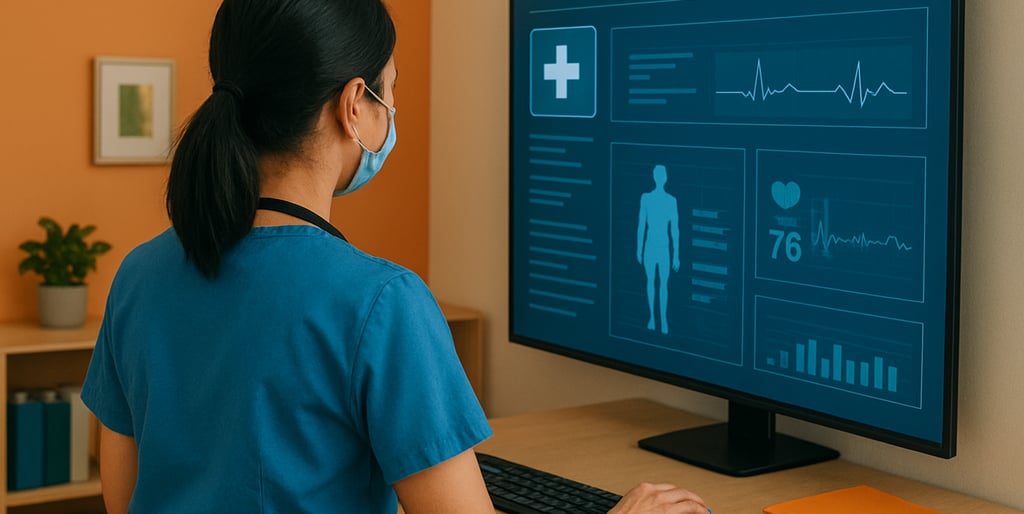
A digital ecosystem for clinical flow management combines multiple technologies—EHRs, real-time dashboards, demand and capacity planning tools, and workflow automation—into an interconnected system that gives clinical teams a shared operational picture. According to a 2024 systematic review published in the Journal of the American Medical Informatics Association, digital dashboards that aggregate data from EHRs, IoT devices, and clinical management systems create unified views of hospital operations, enabling administrators to identify bottlenecks and optimise resource allocation.
The distinction is important: this isn't about adding more technology. It's about orchestrating existing systems to work together seamlessly, reducing rather than increasing the cognitive load on clinical staff.
Core Components of Integrated Ecosystems
Real-Time Operational Dashboards
Modern hospital dashboards do far more than display static metrics. Oracle Health's Clinical Operations Whiteboard, for example, provides near real-time insights into bed capacity by level of care, using predictive analytics to anticipate patient flow and resource needs. Research from 2024 found that real-time bed tracking systems using IoT devices and cloud platforms led to reduced patient wait times and modest declines in readmission rates through better resource allocation.
Demand and Capacity Planning Tools
Effective capacity management requires sophisticated forecasting. A 2024 study published in arXiv demonstrated that optimally allocating beds and strategically transferring just 32 patients over a 63-day period could reduce the need for surge capacity by nearly 90%. According to a maturity model framework published in BMC Health Services Research in 2024, hospitals are increasingly using historical and real-time data to predict demand peaks and troughs, analysing factors including catchment populations, disease prevalence, referral patterns, and average length of stay.
Workflow Automation Systems
Administrative burden remains one of healthcare's most pressing challenges. The 2024 CAQH Index reports that healthcare systems could save upwards of $20 billion by shifting to more automated workflows. Currently, approximately 24% of healthcare labour budgets focus on administrative tasks—work that is repetitive, tedious, and increasingly automatable.
Research published in the Journal of the American Medical Informatics Association identified workflows particularly suited for automation: prior authorisation, clinical documentation, medication reconciliation, laboratory results review, and care transitions. A 2024 evaluation of AI scribes and robotic process automation in Ontario primary care found that these tools reduced time spent on administrative tasks, though successful implementation requires adequate training time and workflow integration.
The Integration Challenge
Building these ecosystems isn't simply a matter of purchasing software. An annual 2024 update to the EHR integration matrix by LeadingAge CAST found that only 8% of medical providers utilise EHR interoperability to its fullest potential, while 25% use only basic integration.
The technical barriers are well-documented: inconsistent data formats, varied adoption of standards like HL7 and FHIR, vendor lock-in through proprietary software, and legacy system integration complexity. However, 2024 research in the Journal of Information Systems Engineering and Management emphasises that successful implementations pair new technology with clearly defined roles, simpler processes, and local testing to ensure clinical teams trust and use the data.
Evidence of Impact and Limitations
A 2024 systematic review examining digital dashboard impacts on hospital inpatient care analysed 70 studies and found mixed results. Of 20 findings reporting mortality, five showed decreases whilst 15 found no significant change. Technology alone doesn't improve outcomes. The review concluded that actual impacts depend heavily on workflow integration and local implementation factors.
More promising results emerge when examining process improvements. Studies report shorter discharge times, better bed turnover, reduced waste, and improved satisfaction when digital tools are implemented alongside workflow redesign.
Building Towards Integration
For hospitals pursuing integrated ecosystems, several principles emerge from current evidence. Start with workflow redesign, not technology deployment. Involve frontline clinical staff from the beginning—surveys consistently show that changes work best when staff diagnose problems and test solutions rather than having systems imposed from above. Invest in interoperability infrastructure including APIs, data standards, and integration platforms. Focus on role-specific interfaces that present relevant information without overwhelming users.
Looking Forward
The vision of truly integrated digital ecosystems remains aspirational for most hospitals, but the components are increasingly mature. Cloud-based platforms offer better interoperability, AI enhances predictive capabilities, and standards like FHIR gain wider adoption. The challenge now is less about technology availability and more about implementation strategy.
For digital health professionals, the opportunity lies in understanding that optimal hospital operations require orchestration across multiple systems. The EHR captures the patient story; dashboards visualise operational reality; automation reduces administrative friction; and capacity planning tools enable proactive resource management. Together, these create something more valuable than their individual components: a digital ecosystem that genuinely supports better patient flow and clinical decision-making.
References
KLAS Research. (2024). EHR Interoperability 2024: Arch Collaborative Report.
Journal of Information Systems Engineering and Management. (2024). IoT Based Hospital Bed Management and Patient Flow Optimization Using AI-Powered Dashboards. Vol. 10(37s).
Parker, F., Ganjkhanloo, F., Martínez, D.A., & Ghobadi, K. (2024). Optimal Hospital Capacity Management During Demand Surges. arXiv:2403.15738.
Myrberg, K., Wiger, M., & Björkman, A. (2024). Development of a maturity model for demand and capacity management in healthcare. BMC Health Services Research, 24, 1109.
CAQH. (2024). 2024 CAQH Index.
Journal of the American Medical Informatics Association. (2022). Priorities to accelerate workflow automation in health care, 29(1).
LeadingAge CAST. (2024). EHR Matrix Annual Update.
Journal of the American Medical Informatics Association. (2024). Clinical and economic impact of digital dashboards on hospital inpatient care: a systematic review.
Oracle Health. (2024). Clinical Operations Solutions.
Clinical evaluation of artificial intelligence and automation technology to reduce administrative burden in primary care. (2024). Ontario.
Contact
Get in touch for collaboration opportunities.
Connect
tina@tinahughes.com
© 2025. All rights reserved.